


When we talk about postpartum recovery, most of the conversation tends to centre around the core and pelvic floor. And while that makes sense, it can also create a very narrow view of what recovery actually requires.
The reality is that your core and pelvic floor don’t function in isolation. They’re part of a wider system that includes the rib cage, diaphragm, pelvis, spine, glutes and hips—and if one part of that system isn’t moving well, controlling well, or producing force well, the rest of the body has to adapt around it.
This is where the hips come in. They play a key role in how the pelvis shifts, rotates and stabilises as the body moves through space. When rotation is limited or the hips struggle to control side-to-side movement, other areas often step in to compensate, which is one of the reasons they matter so much postpartum.
You feel this in everyday life—when you’re carrying your baby on one side, walking, climbing stairs, getting off the floor, pushing a stroller, lifting weights, or trying to return to running. It also shows up in how your pelvic floor responds under load, rather than constantly feeling like it’s taking the brunt of everything.
When the hips aren’t doing their job well, something else almost always ends up picking up the slack.
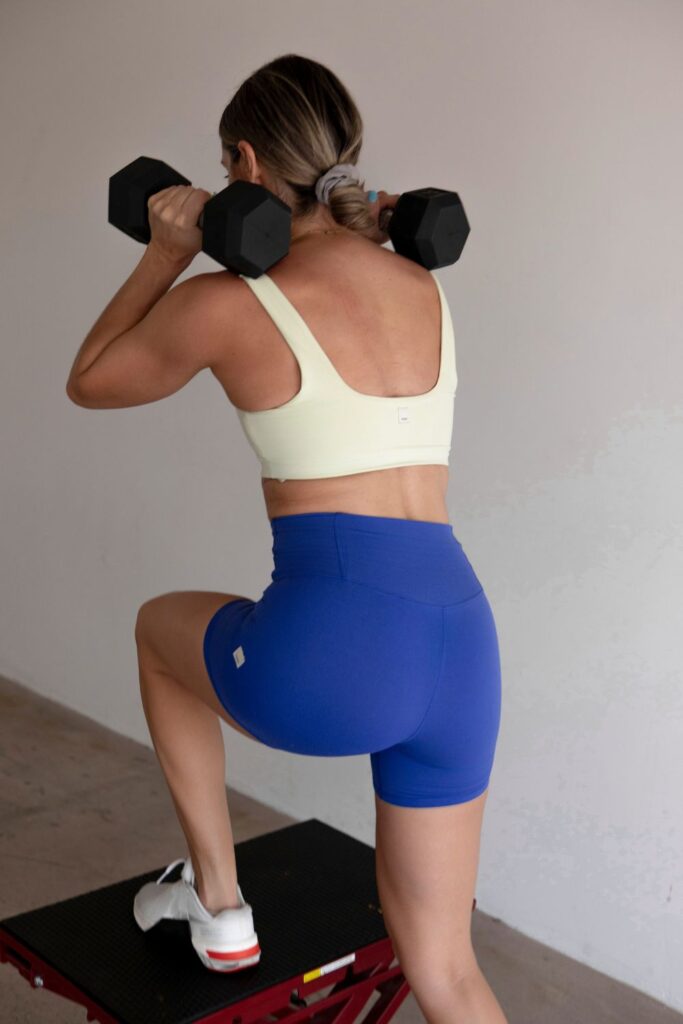
Why the hips matter so much postpartum
Pregnancy places a significant and often underestimated set of demands on the body. Your centre of mass shifts, your rib cage changes position, the abdominal wall lengthens, and the pelvis adapts to support a growing baby. Alongside that, breathing mechanics often change, and over time, many people develop movement strategies that help them get through pregnancy but aren’t necessarily the most efficient long term.
Then postpartum, you’re asked to recover while also caring for a baby—feeding, lifting, carrying, rocking, walking, and often returning to exercise before your body has fully re-established its baseline, or without clear guidance on how to. This doesn’t mean your body is broken, but it does mean the system often needs support and a more intentional approach to rebuilding.
The hips sit right in the middle of that process because they act as a key interface between the trunk and the lower body. They influence how the pelvis moves, how load is transferred from one leg to the other, and how effectively the glutes, hamstrings, adductors, and hip flexors contribute. They also play a major role in how the body creates and controls rotation, how much compensatory movement shows up through the spine or rib cage, and how pressure is managed during both strength work and impact.
This is one of the reasons someone can be doing “core rehab” and still feel like something is missing because without rebuilding hip strength and pelvic control, the system never quite comes together.
The postpartum problem is often not just weakness
A lot of people assume that if their hips feel tight postpartum, the answer is stretching. Tightness is not A lot of people assume that if their hips feel tight postpartum, the answer is stretching. But tightness isn’t always a sign that you simply need more passive range. More often, it reflects a lack of access, control, or confidence in a particular movement. In other words, the body isn’t avoiding range because it doesn’t exist, it’s avoiding it because it doesn’t feel stable or supported there.
This can show up in different ways. If you can’t shift well into one hip, you may avoid fully loading that side. If internal rotation is limited or poorly controlled, the pelvis may struggle to move efficiently over the femur. Weak adductors can lead to poor side-to-side control and a sense of instability, while underperforming hip flexors may force other tissues to take over basic tasks like lifting the leg or supporting the trunk. And when posterior chain strength is lacking, the body often defaults to lumbar extension to create movement that should be coming from the hip.
This is where the conversation needs to move beyond “just stretch your hips.” Mobility that isn’t supported by strength and control rarely transfers. You might be able to access a range on the floor, but the real question is whether you can use it standing on one leg, decelerating into a step, hinging with rotation, or lifting something with confidence.
Postpartum hip training is about whether you can control that motion, stabilise the pelvis while the femur moves, produce force through the hip without compensating through the back or gripping through the trunk, and ultimately use that range when it actually matters. That’s why strength-based hip work is so important.
What “strong hips” actually means
The hips need to do multiple jobs, often at the same time.
1. The hips need to shift
Shifting is a huge part of efficient lower body movement, but it is often overlooked.To walk, squat, lunge, climb stairs, or stand on one leg, your pelvis needs to be able to move over the femur and your body needs to be able to accept load from side to side.
If you cannot shift well, you often see:
- weight staying biased to one side
- overuse of the lower back
- poor single leg control
- compensations through the knees or feet
- difficulty feeling stable in split squats, lunges, or step variations
A good hip shift is not just “swaying” into one side. It is a coordinated transfer of load with the pelvis, trunk and hip all working together.
2. The hips need to rotate
Hip rotation matters far more than most people realise.
Walking is rotational. Running is rotational. Rolling, changing direction, carrying asymmetrical load, hinging with control — all of it involves rotation.
Both internal and external rotation matter, and neither should be thought of purely as a mobility party trick. Rotation gives the pelvis and femur options. It helps the hip joint move more efficiently. It supports pelvic mechanics. It gives you access to better force transfer and better control.
When rotation is limited or poorly controlled, the body often finds motion elsewhere:
- the pelvis twists excessively
- the lumbar spine rotates or extends more than it should
- the knees collapse in or stay overly rigid
- the foot may compensate to find motion lower down the chain
3. The hips need to stabilise the pelvis
This is a big one. Every time you stand on one leg, walk, go up stairs, do a split squat, carry a child on one hip, or transition from the floor, your hips are helping control pelvic position.
That requires more than glute med. It requires coordination across the lateral hip, adductors, obliques, deep core and the rest of the trunk. This becomes especially important postpartum because many people feel unstable in single leg work, side-to-side movement, or anything that challenges one side more than the other.
4. The hips need to produce force
The hips are major drivers of force production.They help you hinge, squat, push into the ground, propel forward, absorb force, and lift external load. But postpartum, a lot of people spend time doing gentle rehab work and then never fully bridge the gap back into meaningful strength.
That is where things can feel stuck.
You may feel better and have improved awareness. But you still do not feel powerful, capable, or resilient under load. That is usually a sign you need to build more strength through these hip functions:
- extension
- abduction/adduction
- rotation
- single leg loading
- deceleration and control
How stronger hips support the core and pelvic floor
This is the piece I think many people miss. When I say strong hips support postpartum recovery, I do not mean that hip exercises magically fix every core or pelvic floor issue. I mean that the hips are part of the larger system that determines how load and pressure are managed. When the hips are doing their job well:
- the pelvis is often better supported
- the lower back does not need to create motion that should come from the hip
- load can be transferred more efficiently through the lower body
- the pelvic floor has a better chance of responding to pressure rather than constantly trying to “hold on”
That matters because many postpartum symptoms are not just about one tissue being weak. They are often about how the whole system is organising under demand. Often, rebuilding hip strength and coordination helps because it changes how the rest of the system participates. Again, this is not about isolating the hips away from the core. It is about giving the core and pelvic floor better support by improving what is happening around them.
Exercises that fit this approach and why
Here are the exercises you mentioned, with a deeper look at why each one supports the “strong hips = strong postpartum” message.
1. Lumbar locked hip extension
End-range hip extension can often feel more limited postpartum, not simply because of “weak glutes,” but due to changes in how the pelvis and rib cage are positioned and how the system coordinates under load. After pregnancy, it’s common to see a more anteriorly tilted pelvis paired with a slightly flared rib cage. This position places the hips closer to extension at rest, which means when someone tries to actively move into hip extension, they run out of true range more quickly and often compensate by extending through the lower back. At the same time, reduced access to posterior hip space makes it harder for the femur to glide back in the socket, so instead of clean hip extension, the body finds motion through the lumbar spine. Add in pressure management challenges where the body may default to gripping through the upper abs or glutes and end range positions can feel unstable or difficult to control.
This is where lumbar locked hip extension becomes such a valuable drill for improving hip mobility. By positioning the body in a flexed, hips-to-heels setup, it effectively limits the ability to extend through the lumbar spine, forcing any movement into extension to come from the hip itself.
Overall, lumbar locked hip extension teaches not just more range, but better use of that range. It helps re-establish where hip extension should come from, how to access it without compensating through the lower back, and how to coordinate the pelvis, trunk, and hip as a system, making it far more transferable to strength work like bridges, split squats, and even running mechanics.
2. Copenhagen with forward reach
A short lever Copenhagen plank with a forward reach improves hip mobility by targeting the adductors in a way that builds both strength and control, rather than just passively stretching them. Postpartum, the adductors often lose their ability to effectively support the pelvis and coordinate with the core, which can limit how well the hips move—especially in the frontal and transverse planes. In this variation, the top knee is on the bench (short lever) creating an isometric contraction through the inner thigh. This helps restore the adductors’ role in stabilising the pelvis and guiding femur movement, which is key for accessing more usable hip range.
The forward reach adds another layer by integrating the trunk with the hips. As you reach, you encourage better rib positioning and engage the obliques and serratus, which helps reduce over-reliance on the lower back or hip flexors.
3. Single leg bridge with leg whip
An isometric single leg bridge with a leg whip improves hip mobility by building control at the pelvis while the moving leg challenges range in the frontal plane. Postpartum, it’s common to rely on lumbar extension or shift through the pelvis to create movement, rather than actually moving the femur in the socket. Holding the bridge on one leg creates a stable base through the stance hip—engaging the glutes, hamstrings, and adductors to keep the pelvis level while the opposite leg moves out to the side. This encourages true hip motion without losing position, helping restore how the hips move independently from the pelvis.
4. Short Lever Side Plank with Hip Rotation
A short lever side plank with rotation improves hip mobility by building control through internal and external rotation while the pelvis stays stable. In this position, the short lever side plank creates a stable base through the bottom leg and trunk, while the top leg moves between internal and external rotation.
The rotational component also brings in the deep hip rotators alongside the obliques and lateral core, helping connect hip movement to trunk control. As you move between IR and ER, you’re not just accessing range, you’re learning to control it, which is often what’s missing postpartum. This improves how the hips handle rotational demands in movements like lunging, changing direction and running, where the ability to control rotation is just as important as strength or flexibility.
5. Hip flexor lift-off
A seated hip flexor lift-off improves hip mobility by restoring active control into hip flexion without compensating through the pelvis or lower back. In this position, sitting upright one knee locked and opposite straight, allows you to isolate one leg and actively lift it off the ground. This challenges the hip to move into flexion while the pelvis stays relatively still, helping re-establish true femur-on-pelvis movement rather than relying on shifting or leaning to create range.
Because the movement is small and controlled, it also improves coordination between the hip flexors and the deep core. Staying tall through the trunk encourages better rib-to-pelvis positioning, reducing the tendency to compensate through the lower back or over-grip through the front of the hip. Instead of stretching for more mobility, this drill builds it by strengthening the hip flexors in a position where they can work effectively, making it highly transferable to movements like marching, running, step-ups and single-leg strength work.
6. Staggered rotational deadlift with foam roller on wall
A staggered rotational deadlift with a foam roller on the wall improves hip mobility by teaching the working hip to control rotation and load through the hinge. Pressing the working leg into the foam roller creates lateral hip engagement bringing in the glutes and adductors to stabilise the pelvis, while the staggered stance allows you to bias one hip without fully removing support. As you hinge, the hip is loaded in a way that encourages better posterior hip space and a cleaner femur on pelvis relationship.
Adding the rotation toward the working leg further challenges how the hip handles transverse plane movement. Holding the dumbbell on the opposite side increases the rotational demand, requiring the trunk and hip to work together to control the movement rather than collapse into it. This integrates the obliques with the hip musculature, helping maintain rib to pelvis alignment while the femur moves and rotates in the socket.
7. Single leg goblet squat to bench
A single leg goblet squat to bench improves hip mobility by building control through hip flexion while maintaining pelvic and trunk alignment.
Because it’s a single-leg variation, it also challenges how the hip manages load in the frontal plane. The glutes and adductors work together to stabilise the pelvis as you lower and stand, helping guide the femur in the socket rather than letting the knee collapse or the pelvis shift. This improves not just access to range, but control within it, making it more usable for real movement. Instead of forcing depth through passive flexibility, this drill builds hip mobility through strength and coordination, with clear carryover to lunging, squatting, step-ups, running, and everyday single leg tasks.
What this looks like in practice
If you want postpartum hips to be stronger, more capable, and better integrated with the rest of the system, the answer is usually not one magic exercise.
It is exposing the body to a more complete training menu.
That may include:
- Active mobility instead of just passive stretching
- Adductor loading
- Rotational patterns
- Lateral loading
- Single leg strength
- Hip flexor strength
- Posterior chain work with pelvic awareness
This does not mean every workout needs all of those. It means that over time, your program should cover those qualities if the goal is well rounded hip function postpartum. Because if all you ever do is bridges, squats, and clamshells, you may improve some things, but you are still missing a lot of what the hips need to do in real life.
If you’re reading this and thinking “this all makes sense, but I don’t know how to actually structure it,” that’s where having a plan matters. Because it’s not just about doing a few good exercises, it’s about how they’re progressed, combined, and layered over time so your hips (and your whole system) actually become stronger, more capable and more resilient.
Inside the Lift With Emily App, this is built into every program. You’re not just given random workouts. You’re guided through structured training that develops hip strength across all of the qualities we’ve talked about: shifting, rotation, lateral control, single leg strength, and force production, all while integrating core and pelvic floor function.
Whether you’re early postpartum or further along and ready to rebuild real strength, the programs are designed to meet you where you are and move you forward with intention.
Try your first 7 days for free!
I’m deeply passionate about helping women feel strong, informed, and confident through every stage of motherhood. You deserve more than just a list of do’s and don’ts or generic modifications. With years of hands-on coaching across all kinds of athletes and clients, I blend real-world experience with specialized pre and postnatal knowledge to create strength programs that go far beyond basic adjustments. This is high-level, accessible training - built for your body, your season, and your goals

EXPLORE MORE POSTS
GET TO KNOW EMILY


